If you’ve ever tried to buy a mid-range graphics card — the component inside your PC that renders everything you see on screen — you already know the pain: two strong options at similar prices, each with a different set of tradeoffs, and real money on the line. A GPU (Graphics Processing Unit) is essentially your computer’s visual engine. It handles gaming frames, video rendering, 3D work, and increasingly, AI-assisted tasks. In mid-2026, two GPUs are splitting the attention of almost every builder in the $450–$700 range: AMD’s Radeon RX 9070 XT, built on AMD’s newest RDNA 4 chip architecture, and NVIDIA’s RTX 5060 Ti, built on NVIDIA’s Blackwell architecture. Both are genuinely capable cards. The question isn’t which one is “better” in the abstract — it’s which one is better for you, given your workload, your display setup, and how much you value each company’s software ecosystem. This article breaks down exactly that.
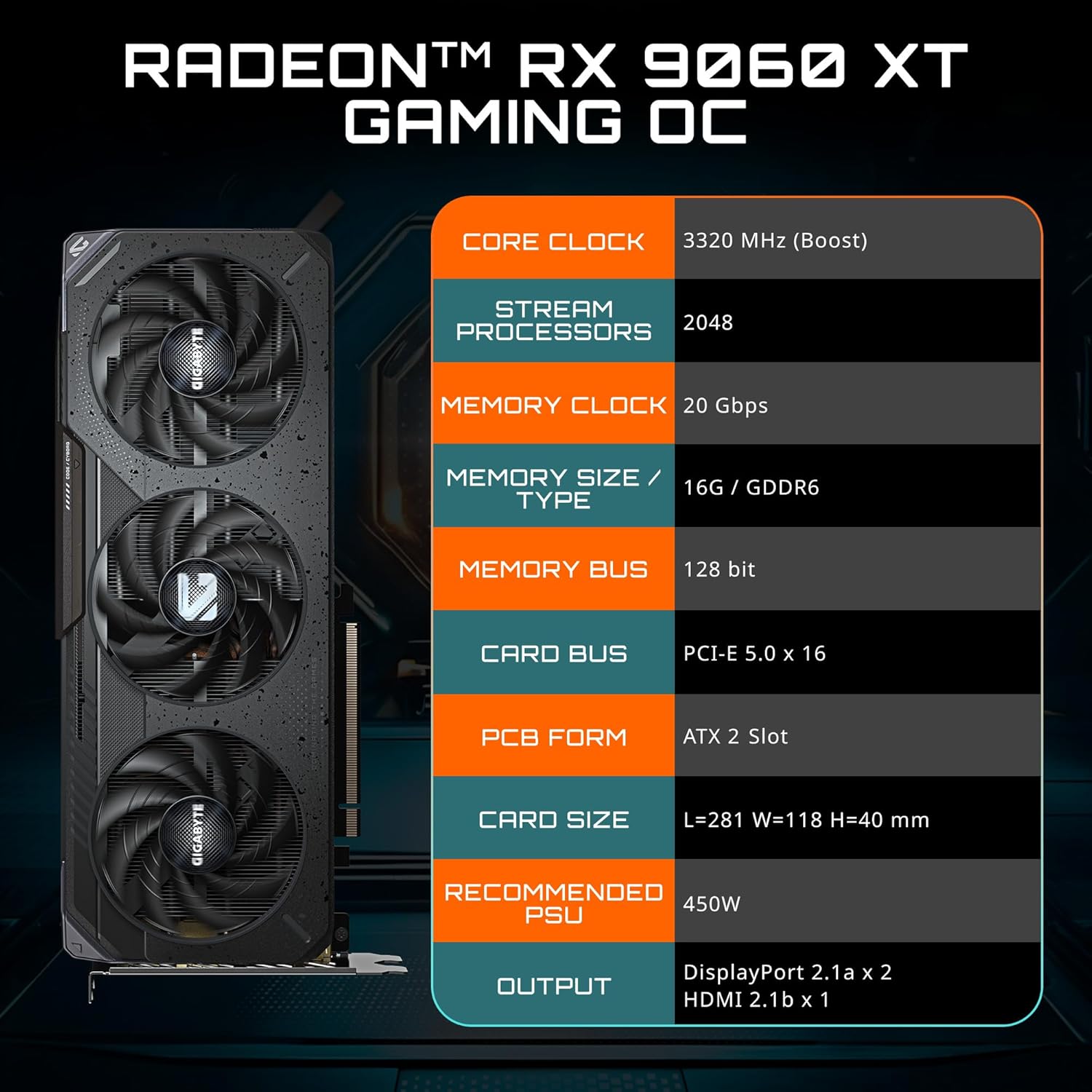
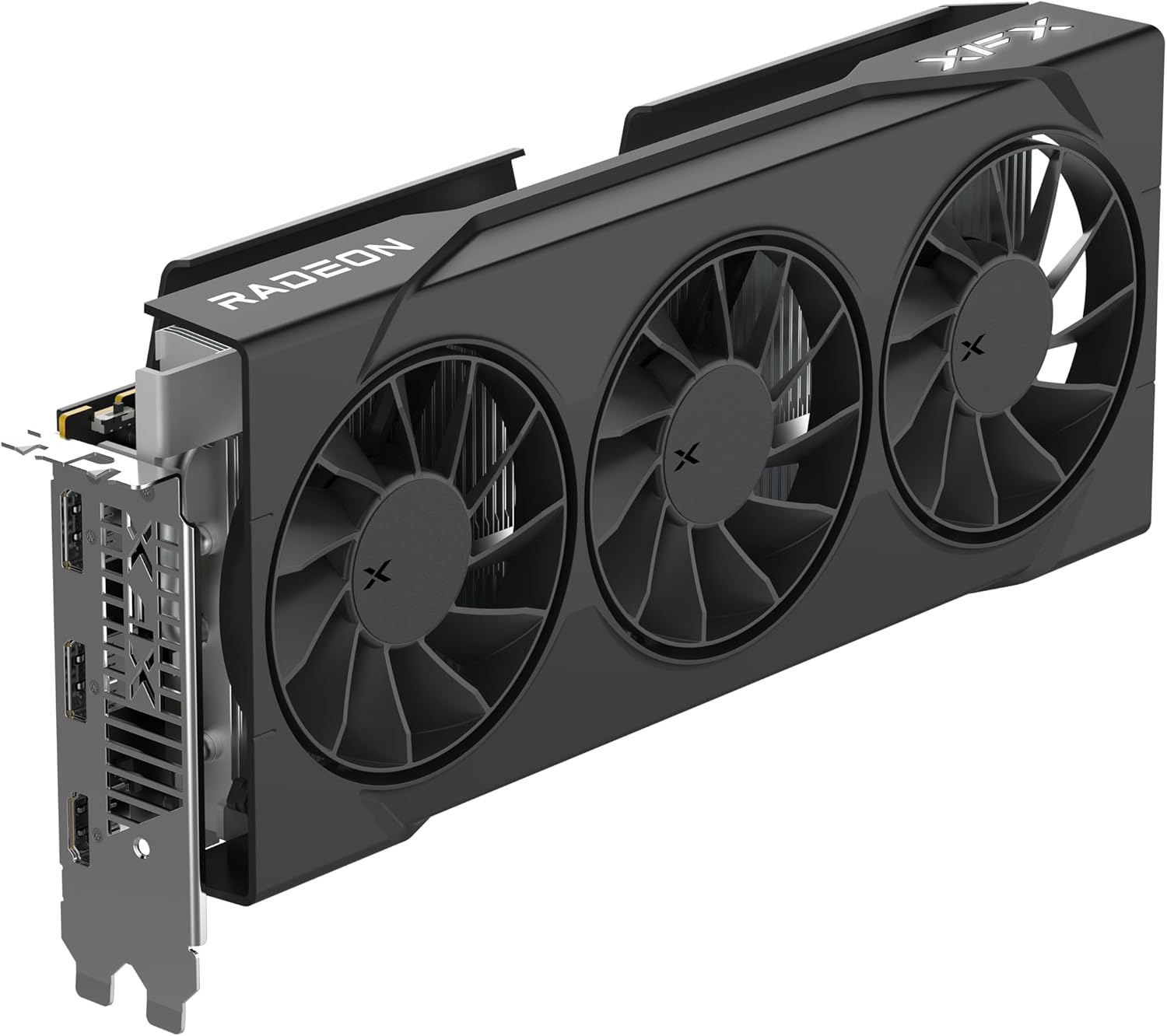
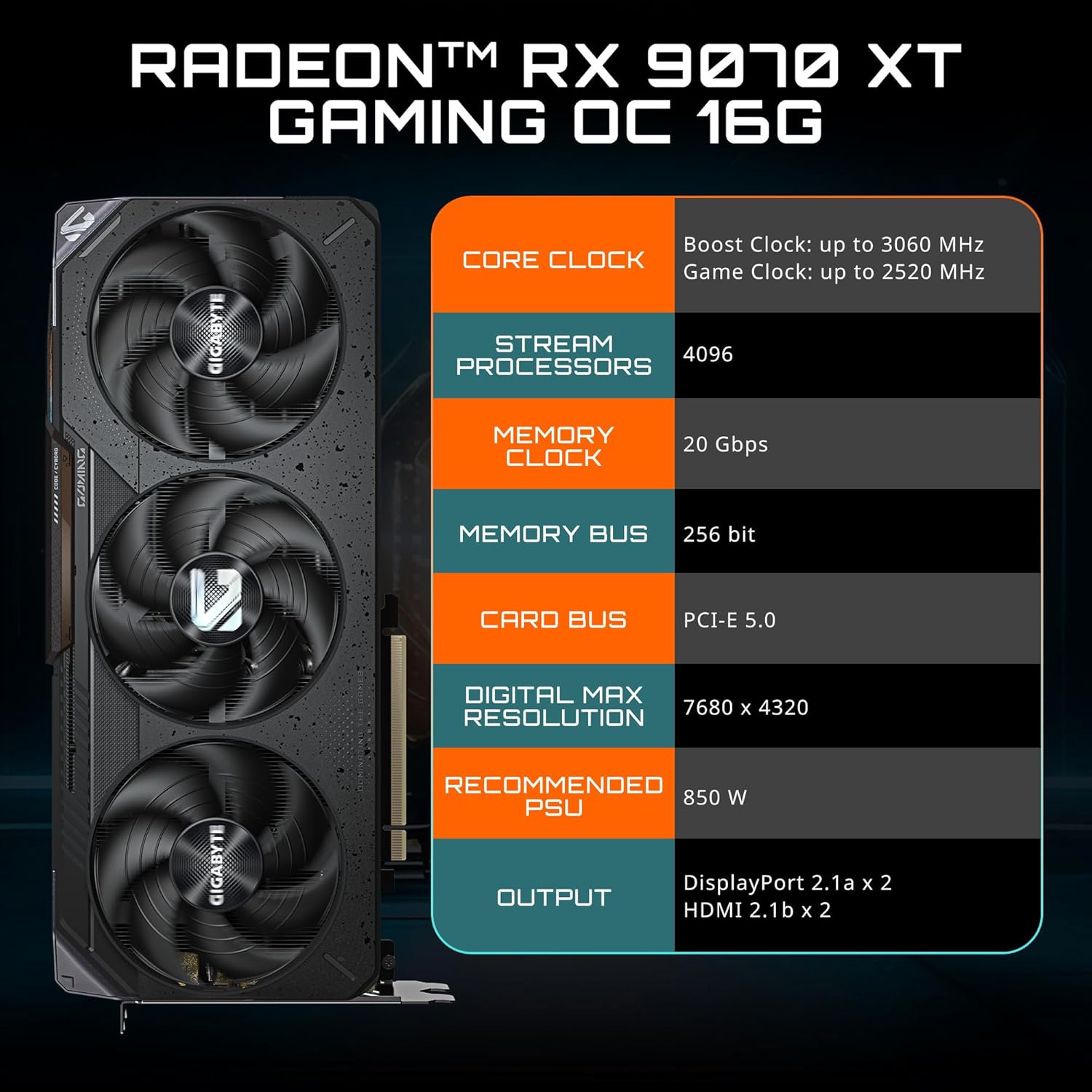
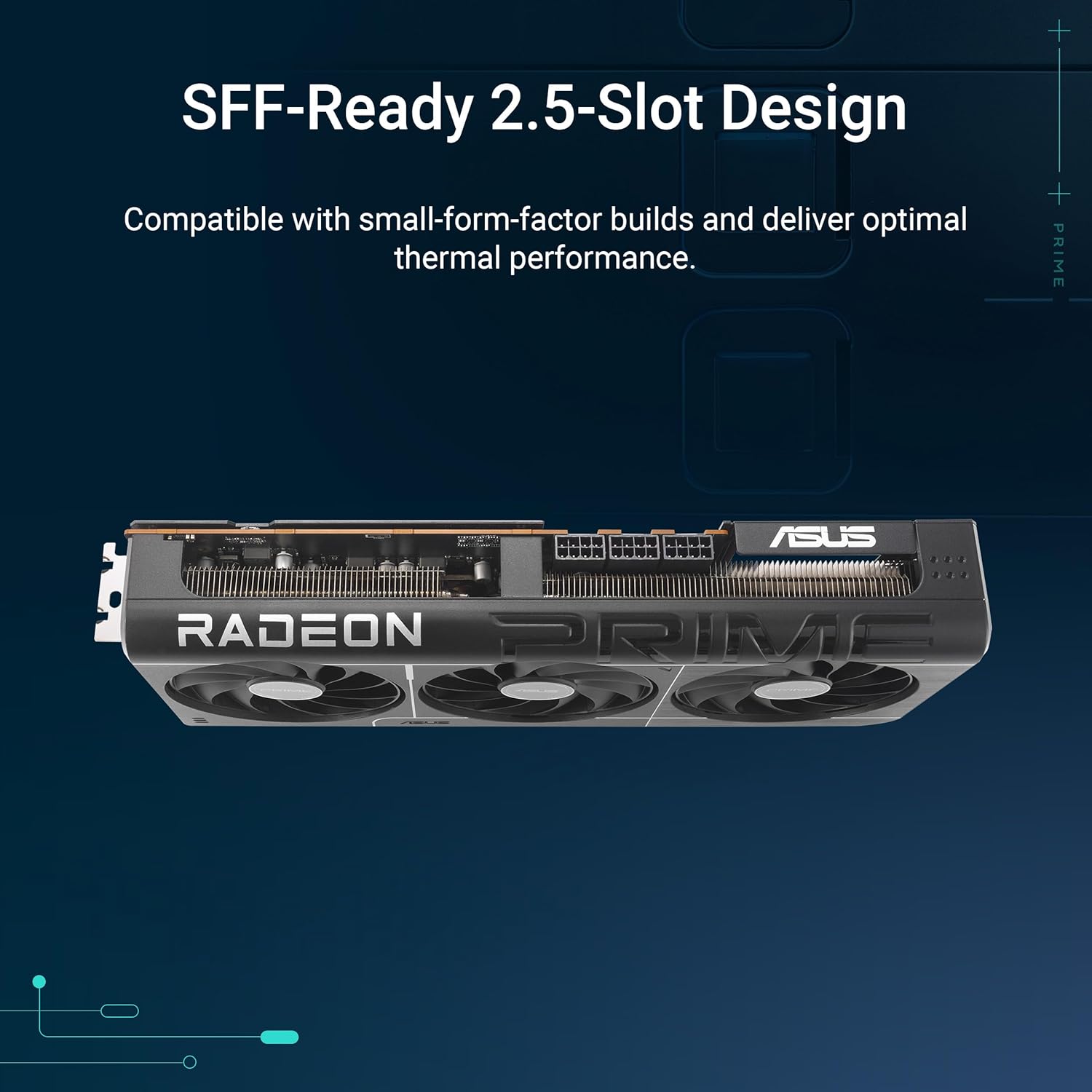
| EDITOR'S PICK[ASUS Prime AMD Radeon RX 9070 X…](https://www.amazon.com/dp/B0DRRMZDH6?tag=greenflower20-20) | Mid-tier[GIGABYTE Radeon RX 9070 XT Gami…](https://www.amazon.com/dp/B0DS2QG2KW?tag=greenflower20-20) | Budget pick[XFX Swift AMD Radeon RX 9060 XT…](https://www.amazon.com/dp/B0F8128Y33?tag=greenflower20-20) | |
|---|---|---|---|
| GPU Chip | RX 9070 XT | RX 9070 XT | RX 9060 XT |
| PCIe Version | 5.0 | 5.0 | — |
| Fan Type | Axial-tech | — | Triple Fan |
| Warranty | 3 Year | — | — |
| Price | $699.99 | $679.99 | $449.99 |
| See on Amazon → | See on Amazon → | See on Amazon → |
The Specs Side-by-Side: What You’re Actually Buying
Let’s start with the published hardware numbers, because the gap between these two cards is both real and context-dependent.
| Spec | AMD RX 9070 XT | NVIDIA RTX 5060 Ti |
|---|---|---|
| MSRP (launch) | ~$599 | ~$499 (8 GB) / ~$549 (16 GB) |
| VRAM | 16 GB GDDR6 | 8 GB or 16 GB GDDR7 |
| Memory bus width | 256-bit | 128-bit |
| TDP (power draw) | ~304W | ~180W (8 GB) / ~220W (16 GB) |
| Target resolution | 1440p / 4K capable | 1440p primary |
| Upscaling tech | FSR 4 | DLSS 4 |
Sources: Tom’s Hardware, AMD Radeon RX 9070 XT Review; PC Mag, NVIDIA RTX 5060 Ti Review; manufacturer specification sheets.
The top-line story: AMD ships 16 GB of VRAM as standard across every RX 9070 XT. NVIDIA split the RTX 5060 Ti into two SKUs — an 8 GB version at roughly $499 and a 16 GB version at roughly $549. That decision has generated significant controversy among reviewers, and we address it directly in the next section.
The VRAM Question: Why 8 GB Is a Real Problem in 2026
VRAM — Video RAM, the dedicated memory pool your GPU uses to store textures, scene data, and frame buffers — has become one of the defining battlegrounds of this generation.
The 8 GB Ceiling Problem
XFX
$449.99
In stock on Amazon
Check price on AmazonTom’s Hardware’s AMD Radeon RX 9070 XT Review notes that 16 GB “has become the practical minimum for 4K gaming with high texture settings in 2025–2026 titles,” and that 8 GB cards show measurable stuttering and texture pop-in in games like Alan Wake 2 and Cyberpunk 2077 at 1440p ultra settings, as well as several Unreal Engine 5 titles. Ars Technica’s RDNA 4 Architecture Deep Dive goes further, pointing out that VRAM pressure isn’t just a gaming issue — it is a hard ceiling for anyone running local AI inference workloads or doing light video editing in tools like DaVinci Resolve.
The RTX 5060 Ti 8 GB is priced aggressively at roughly $499, but the pattern across aggregated reviews at launch is consistent: it throttles meaningfully before the 16 GB version in memory-intensive scenarios, and the performance gap between the two NVIDIA SKUs is larger than the $50 price difference implies. PC Mag’s NVIDIA RTX 5060 Ti Review explicitly recommends skipping the 8 GB variant for any buyer planning to own this card for two or more years.
If you are comparing the RTX 5060 Ti to the RX 9070 XT, you should be comparing the 16 GB versions of both. At that level, the $50 price gap narrows the decision considerably.
XFX
$449.99
In stock on Amazon
Check price on AmazonThe 16 GB Standard: AMD’s Structural Advantage
GIGABYTE
$679.99
In stock on Amazon
Check price on AmazonAMD’s decision to ship 16 GB GDDR6 across all RX 9070 XT units eliminates the SKU confusion entirely. There is no lower-memory version to accidentally purchase, no compatibility asterisk to parse. For buyers who want a single straightforward choice at roughly $599, that simplicity has real value. The 256-bit memory bus also gives the RX 9070 XT raw memory bandwidth that outpaces the RTX 5060 Ti’s 128-bit bus, which reinforces AMD’s lead in memory-heavy scenarios regardless of which NVIDIA SKU is being compared.
Ars Technica’s RDNA 4 Architecture Deep Dive highlights this bus-width gap as one of the key architectural differences between the two generations, noting that AMD’s wider bus contributes to the 9070 XT’s stronger performance in high-texture and high-resolution workloads where VRAM bandwidth — not just capacity — is the bottleneck.
GIGABYTE
$679.99
In stock on Amazon
Check price on AmazonRaw Performance: Where Each Card Wins
Based on published benchmarks at launch from Tom’s Hardware, Digital Trends, and TechRadar’s Best GPUs 2026: Mid-Range Shootout, here is the honest picture at 1440p, which is the primary resolution both cards target.
Rasterization and Standard Gaming Performance
GIGABYTE
$679.99
In stock on Amazon
Check price on AmazonRasterization is the standard technique modern games use to render 3D scenes — converting geometry into pixels through a series of hardware-accelerated calculations. It represents the majority of the GPU workload in most games released today.
The RX 9070 XT trades blows with the RTX 5060 Ti 16 GB in rasterized workloads, with AMD holding a consistent five to ten percent average performance advantage across a broad game library at 1440p. TechRadar’s Best GPUs 2026: Mid-Range Shootout puts the RX 9070 XT performing at a level comparable to cards one tier above where NVIDIA positions the RTX 5060 Ti in rasterization. For pure frame-rate-per-dollar in games that do not heavily rely on NVIDIA-specific features, AMD wins this category.
Ray tracing — a rendering technique that simulates real-world light behavior for more accurate reflections, shadows, and global illumination — is where NVIDIA retakes the lead. The RTX 5060 Ti 16 GB outperforms the RX 9070 XT by roughly fifteen to twenty-five percent in ray tracing-heavy scenes, per Digital Trends’ RTX 5060 Ti First Look and Benchmark Summary. If you play titles where ray tracing is central to the visual experience, that gap is visible and meaningful.
GIGABYTE
$679.99
In stock on Amazon
Check price on AmazonUpscaling: FSR 4 vs. DLSS 4
GIGABYTE
$679.99
In stock on Amazon
Check price on AmazonBoth cards support their manufacturer’s upscaling technology — a process that renders frames at a lower internal resolution and then uses software reconstruction to recover image quality and performance at the target display resolution.
DLSS 4 (NVIDIA) continues to produce slightly sharper and more temporally stable results than FSR 4 (AMD) in head-to-head comparisons, per TechRadar’s Best GPUs 2026: Mid-Range Shootout testing summaries. However, reviewers broadly note that FSR 4 represents a substantial generational improvement over FSR 3, and the quality gap has narrowed to the point where most users will not notice a meaningful difference in everyday play.
One important structural distinction: FSR 4 is an open standard that works across GPUs from any manufacturer, including NVIDIA hardware. DLSS 4 is exclusive to NVIDIA’s RTX lineup. For buyers who may upgrade GPU brands in the future, or who game on multiple machines, AMD’s open approach to upscaling has real practical value.
GIGABYTE
$679.99
In stock on Amazon
Check price on AmazonContent Creation, Professional Workflows, and AI Workloads
ASUS
$699.99
In stock on Amazon
Check price on AmazonThis is where the split becomes most consequential for non-gaming buyers. NVIDIA’s CUDA platform — a parallel computing framework that major professional applications have optimized for over more than a decade — gives the RTX 5060 Ti a real-world acceleration advantage in software such as DaVinci Resolve, Blender’s Cycles renderer, ComfyUI, and many machine learning inference tools. Puget Systems, which publishes documented, reproducible GPU benchmark methodology for professional creative applications, consistently shows NVIDIA holding a meaningful edge in CUDA-dependent workflows at equivalent price points.
AMD’s ROCm compute platform has improved across successive driver generations, but as of mid-2026, fewer professional applications are optimized for it compared to CUDA. Ars Technica’s RDNA 4 Architecture Deep Dive acknowledges this gap, noting that ROCm’s ecosystem maturity remains the primary reason professional users default to NVIDIA when compute compatibility matters.
If your primary workload is video editing in Resolve or GPU-accelerated rendering in Blender Cycles, the RTX 5060 Ti’s CUDA compatibility is a practical differentiator. If you are gaming-first or working in applications that do not specifically leverage CUDA, that advantage does not apply to your use case.
ASUS
$699.99
In stock on Amazon
Check price on AmazonPower Efficiency and Thermal Tradeoffs
The RTX 5060 Ti’s Blackwell architecture is dramatically more power-efficient than the RX 9070 XT. A 180–220W TDP (thermal design power — the maximum sustained wattage a card draws under full load) versus the RX 9070 XT’s approximately 304W is a real and consequential difference. It means:
- Smaller, quieter coolers on many partner board designs
- Lower cumulative electricity cost over months of regular use
- More headroom in compact ITX or small form-factor builds where airflow is constrained
- A lower PSU (power supply unit) requirement — the RTX 5060 Ti can typically run on a quality 650W PSU, while the RX 9070 XT is more comfortable with 750–850W
Ars Technica’s RDNA 4 Architecture Deep Dive acknowledges that AMD’s RDNA 4 architecture improved efficiency meaningfully over its predecessor generation RDNA 3, but notes that NVIDIA’s Blackwell generation established a new benchmark for performance-per-watt in the sub-$600 segment. If you are building in a space-constrained case, operating under a smaller PSU budget, or care about long-run electricity cost, NVIDIA’s efficiency advantage is tangible and worth factoring into the total cost of ownership.
Who Should Buy Which Card
For the Gamer-First Builder
The AMD RX 9070 XT at approximately $599 is the stronger choice if your primary use case is gaming at 1440p and you do not depend on CUDA-accelerated professional tools. It offers a consistent rasterization performance advantage over the RTX 5060 Ti 16 GB, ships with 16 GB of VRAM as a baseline with no SKU ambiguity, and delivers competitive upscaling quality through FSR 4. It requires a 750W or larger power supply and performs best in a standard ATX or mid-tower case with adequate airflow. For buyers who want maximum gaming frame rate per dollar without committing to NVIDIA’s software ecosystem, the math favors AMD.
GIGABYTE
$679.99
In stock on Amazon
Check price on AmazonFor the Efficiency-Focused or Professional Builder
The NVIDIA RTX 5060 Ti 16 GB at approximately $549 is the stronger choice if you use DaVinci Resolve, Blender Cycles, or any CUDA-dependent professional application, or if your build is space-constrained and thermal or power headroom is limited. Its Blackwell architecture delivers substantially better performance-per-watt than RDNA 4, making it the practical default for compact builds and for users who value NVIDIA’s mature software ecosystem — including DLSS 4, NVIDIA Broadcast for streamers, and RTX Video. The $50 savings versus the RX 9070 XT is a secondary benefit; the primary case is workflow compatibility and thermal practicality.
GIGABYTE
$679.99
In stock on Amazon
Check price on AmazonWhat to Avoid
Avoid the RTX 5060 Ti 8 GB unless you have a specific, confirmed reason to believe your workload will stay below 8 GB of VRAM consistently. In mid-2026, that ceiling is lower than it looks given current and upcoming title requirements, and PC Mag’s NVIDIA RTX 5060 Ti Review makes clear that the 8 GB variant represents a compromise that will limit the card’s useful lifespan materially compared to its 16 GB counterpart.
XFX
$449.99
In stock on Amazon
Check price on AmazonThe Bottom Line
The RX 9070 XT and the RTX 5060 Ti 16 GB are the two most competitive cards in the $500–$600 range in mid-2026, and the rivalry between them is genuinely healthy for buyers. AMD wins on raw rasterization performance, VRAM value clarity, and price-to-performance ratio in standard gaming workloads. NVIDIA wins on power efficiency, ray tracing output quality, and professional software compatibility through CUDA. Neither is a wrong choice for a builder who has thought it through.
The single most important variable is the software you actually run. If your workflow depends on CUDA, NVIDIA is the practical answer regardless of rasterization benchmarks. If you are a gamer building for maximum frame rate per dollar at 1440p, the math consistently favors AMD. Power draw, upscaling quality, and ray tracing preference are secondary filters — useful for breaking a tie, but not the right place to start the decision.
At the prices both cards launched at, there is no penalty for choosing the right one for your use case. The only penalty is choosing without working through the question first.
Plain-text sources cited in this article: Tom’s Hardware, AMD Radeon RX 9070 XT Review; PC Mag, NVIDIA RTX 5060 Ti Review; TechRadar, Best GPUs 2026: Mid-Range Shootout; Digital Trends, RTX 5060 Ti First Look and Benchmark Summary; Ars Technica, RDNA 4 Architecture Deep Dive; Puget Systems, GPU Benchmark Methodology for Creative Applications.